Showing posts with label Religion. Show all posts

Friday, 23 August 2013

The Fethard-On-Sea Boycott

By Tim Fanning, 2010
In 1957, Sheila Cloney, Protestant wife of a Catholic farmer, fled her home after refusing to bow to the demands of the local Catholic clergy.
In response, the priests launched a boycott of Fethard's Protestant shopkeepers and farmers.

This is a superbly researched and thought- provoking account.

Purple Hibiscus

By Chimamanda Ngozi Adichie, 2003
Set in post-colonial Nigeria, it features 15 year old Kambili whose world is defined by the high walls of her family estate and the dictates of her fanatically religious and abusive father.

A debut, award-winning novel which explores the nature of family, religious faith and country through complex and credible characters.

Turning Points in Twentieth-Century Irish History

By Thomas Hachey (Editor) 2011

A collection with three great essays on the all-pervasive influence, until very recently, of the Catholic Church in Ireland. Tom Garvin examines the reasons for the collapse of the Catholic Church’s power and comes up with interesting conclusions.

Muslims: Their Religious Beliefs and Practices

By Andrew Rippin, 4th edition 2011
This authoritative guide provides a complete survey of Islamic history and thought from its formative period to the present day. It examines the unique elements that have combined to form Islam. It also addresses key issues, from fundamentalism and women’s rights to problems of identity, Islamophobia and modernity.

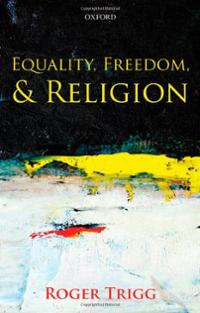
Equality, Freedom, & Religion

By Roger Trigg, 2012
Examines the difficulties in balancing different rights, namely equality and the right to religious freedom. It asks provocative questions. Is religious freedom being curtailed in pursuit of equality? Is enough effort being made to accommodate those motivated by a religious conscience? Is the right to religious practice taking second place in the law to the pursuit of other social priorities?

Doubt: a history

By Jennifer Hecht, 2003
An extraordinary book which provides a detailed history of doubt, reaching back to earliest records and up to the 21st century. Spans the globe, bringing in a cast of characters, some well-known and some obscure, all strung together by the common thread of doubt. Don’t be put off by its length or its ambition – this is an enjoyable read, written with sensitivity.

Go tell it on the Mountain

By James Baldwin, 1953
An American classic, this multi-faceted novel confronts many different themes. On the simplest level, it is the story of a young boy coming of age. It is also the story of religion and racism, of familial expectations and perceptions, and how these forces impact people struggling to survive.

Brideshead Revisited

By Evelyn Waugh, 1945
Catholicism is a significant theme of this classic novel. Waugh was a Catholic convert himself and the book is an attempt to express the Catholic faith in secular literary form.

Catholic themes of divine grace and reconciliation are pervasive and most of the major characters undergo a conversion.

The Reason for God: belief in an Age of Scepticism

By Timothy Keller, 2008
An overview of the faith debate for those who doubt and for those who want to re-evaluate what they believe, and why. Using literature, philosophy, pop-culture, and intellectual reasoning, Keller, a Presbyterian pastor, offers to “Believers” a solid platform on which to stand against the backlash toward religion. 

Persepolis: The Story Of A Childhood

By Marjane Satrapi, 2004
This autobiographical graphic novel of growing up in Iran during the Islamic Revolution tells the story of a young life that witnessed the overthrow of the Shah’s regime, the triumph of the Islamic Revolution, and the devastating effects of war with Iraq. Intensely personal, profoundly political, and wholly original, it is at once a story of growing up and a reminder of the human cost of war.